


Background
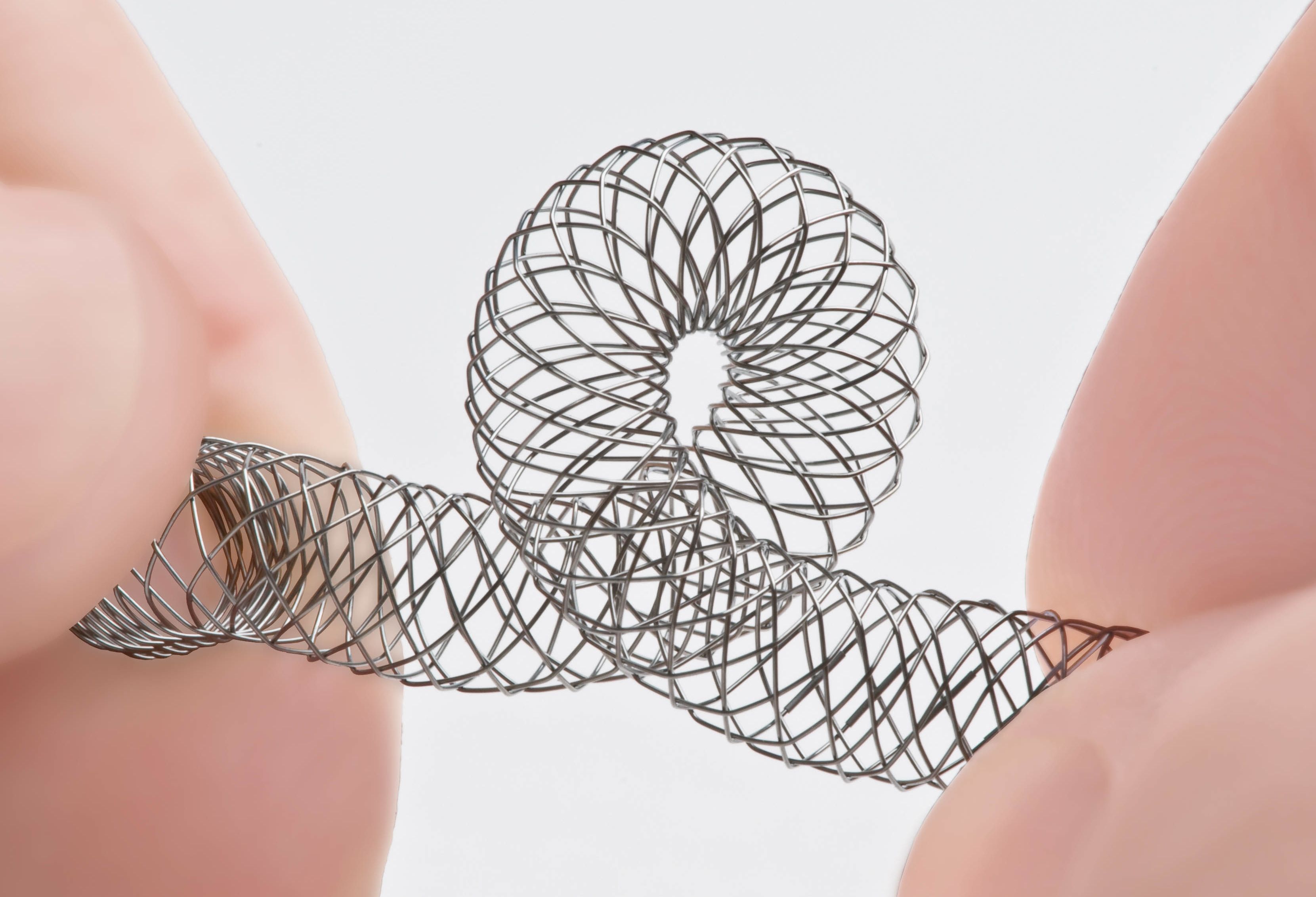
Abbott expanded its product portfolio with the Supera stent through the acquisition of IDEV Technologies in August 2013. The Supera stent has CE Mark in Europe for treating blocked blood vessels caused by PAD.
The company says its Supera stent mimics rather than resists the artery’s natural movement, claiming this to be an important advancement for many PAD patients, helping to ease their leg pain while walking. Its unique, proprietary interwoven wire technology restores blood flow to the treated area, while offering strength and flexibility. Specifically, the Supera stent is now approved to treat blockages in the superficial femoral artery (SFA), a blood vessel in the thigh, and the proximal popliteal artery (PPA), a blood vessel above the knee. Compared to other nitinol stents used to treat blocked blood vessels in the upper leg, the Supera stent is more flexible, stronger and resistant to kinks or fracture under vigorous movement.3 These features are particularly important when treating vessels in the leg, where frequent movement occurs with daily activities, such as walking, sitting and standing.
Data from the SUPERB clinical trial, which was used to support FDA approval of the Supera stent, have shown the Supera stent to be highly effective in opening up blocked blood vessels in the upper leg, even in difficult cases, with outcomes proving durable. During the first year after treatment with the Supera stent there were no stent fractures, and at two years there was a very low stent fracture rate of 0.5 percent. Stent fractures are a known risk of treatment with traditional metallic stents in the leg due to the frequency and type of movement in this part of the body.
The Supera Peripheral Stent System is indicated to improve luminal diameter in the treatment of patients with symptomatic de novo or restenotic native lesions or occlusions of the superficial femoral artery (SFA) and/or proximal popliteal artery with reference vessel diameters of 4.0 to 6.5 mm, and lesion lengths up to 140 mm.
Physician comments
“Doctors are increasingly identifying peripheral artery disease as a major cause of leg pain, which can limit people’s ability to live a healthy lifestyle,” said Kenneth Rosenfield, M.D., section head of Vascular Medicine and Intervention at Massachusetts General Hospital and the principal investigator of the SUPERB clinical trial, which evaluated the Supera stent. “Treatment with the Supera stent, as shown by the results of the SUPERB study, is very effective in easing leg pain, enabling the majority of patients to resume their activities.”
Company comments
“FDA approval of the Supera stent provides an additional treatment option that can make a positive impact on the lives of people suffering from peripheral artery disease,” said Chuck Foltz, senior vice president, vascular, Abbott. “FDA approval of the Supera stent gives Abbott rapid entry into one of the fastest-growing segments of the peripheral stent market, providing Abbott with one of the most comprehensive and competitive peripheral technology portfolios in the industry.”
Source: Abbott, PR Newswire
published: March 31, 2014 in: Abbott, Approval/Clearance, Vascular